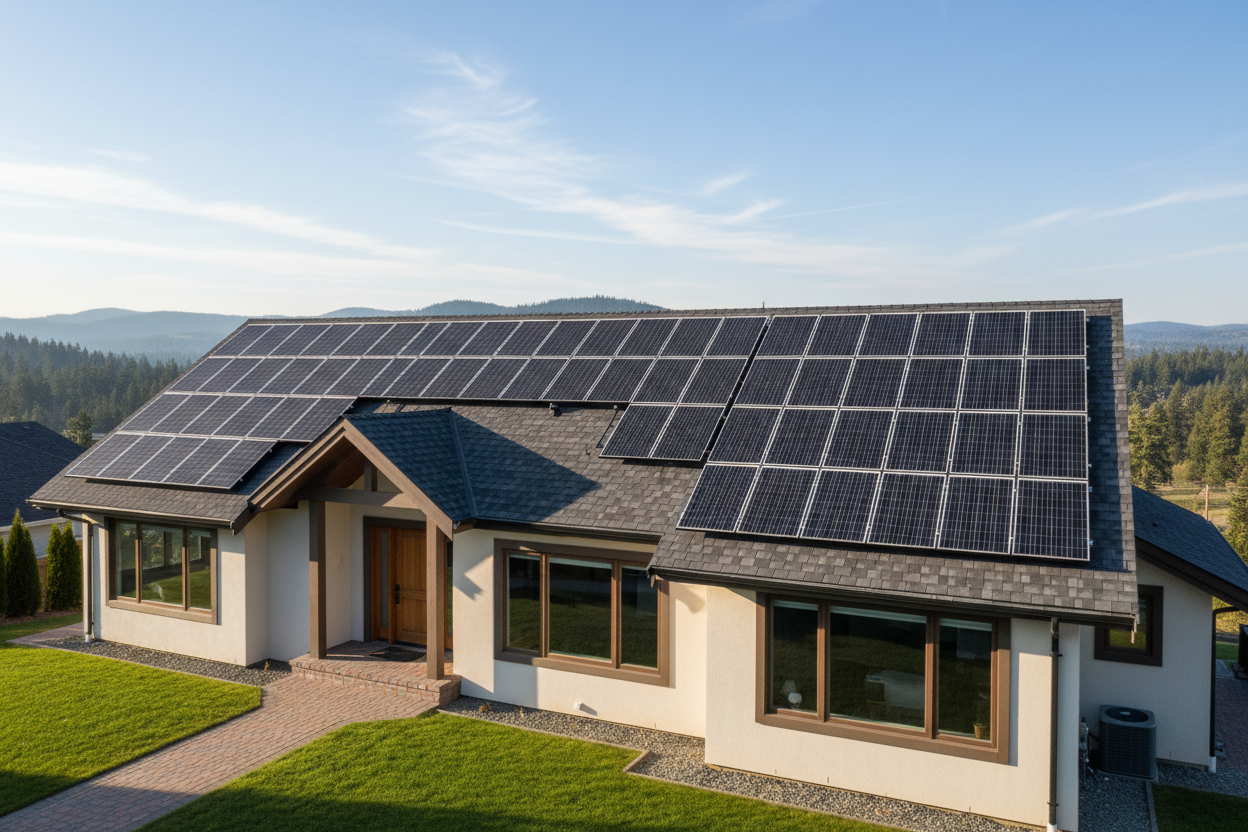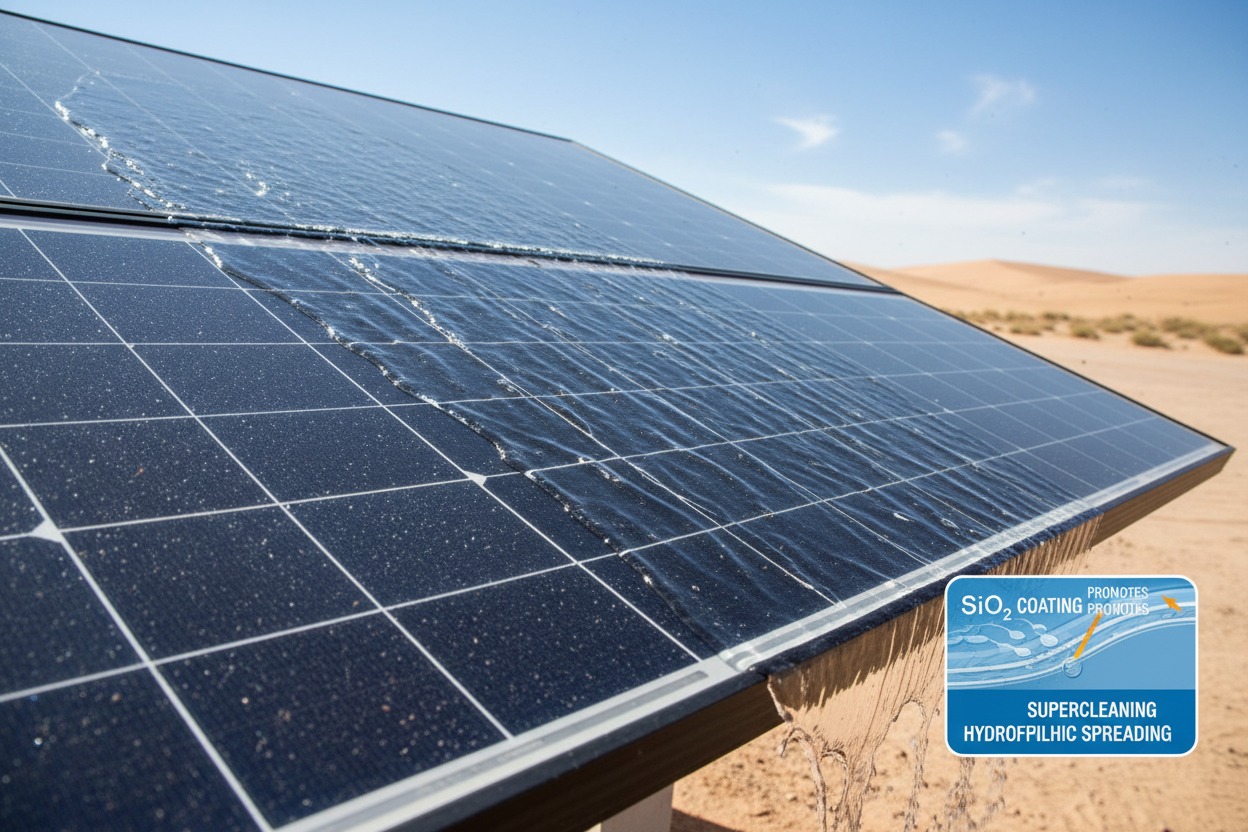
While SiO₂ (silicon dioxide) coatings provide certain surface protection benefits, they are generally not considered the most effective long-term solution for solar panel applications.
Their performance characteristics are better suited to smooth glass surfaces that experience light environmental exposure, rather than rooftop solar systems that are continuously subjected to harsh outdoor conditions and persistent contamination.
SiO₂ coatings are commonly used on products such as shower screens, vehicle windshields, and architectural glass because they create a hydrophobic surface that encourages water to bead and run off more easily.
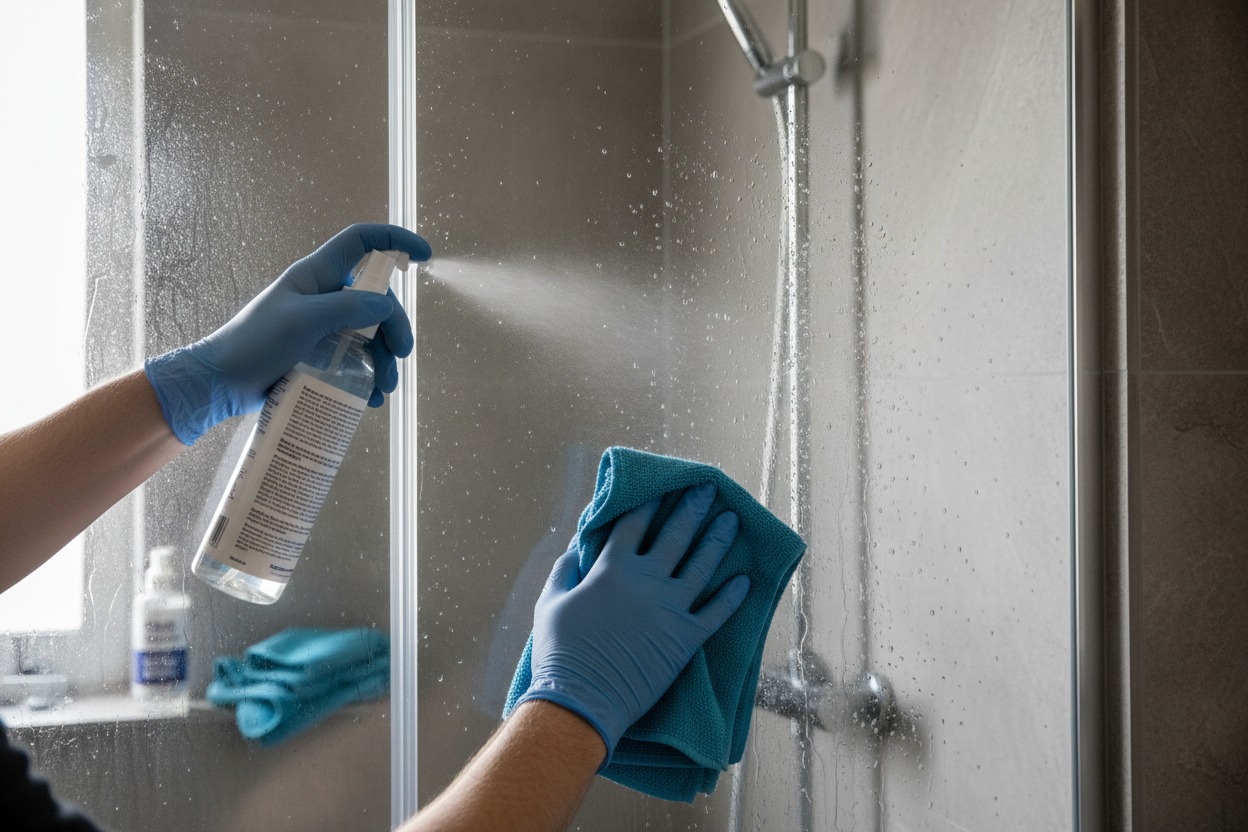
This improves visibility, reduces water spotting, and can make surfaces easier to clean. In controlled or low-contamination environments, these coatings can perform adequately and deliver noticeable short-term benefits.
However, solar panels present a very different challenge. Rooftop photovoltaic systems are exposed to a broad range of environmental pollutants and biological contaminants that standard SiO₂ coatings are not specifically designed to manage.
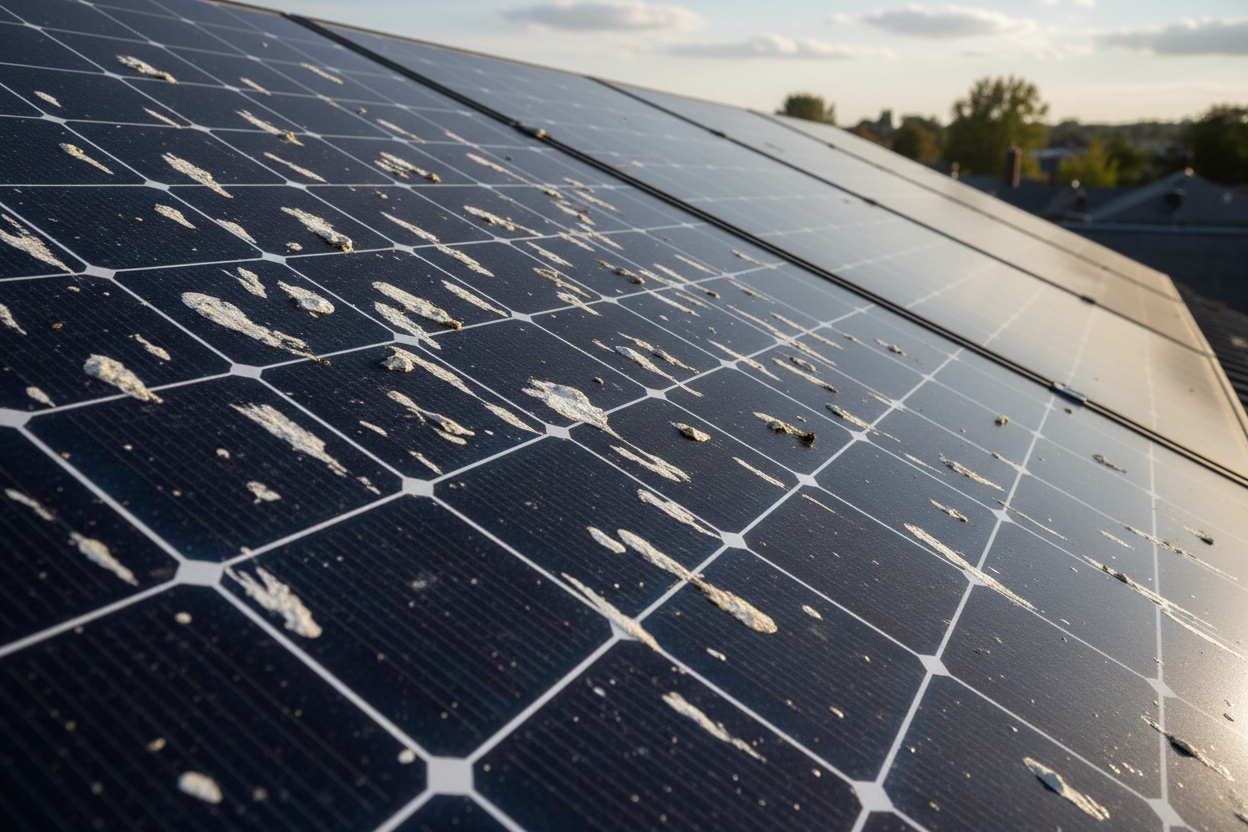
These contaminants include bird droppings, dust accumulation, industrial fallout, tree sap, pollen, algae growth, mould, lichen, and airborne organic matter. Over time, these pollutants can adhere strongly to the glass surface, reducing light transmission and ultimately lowering the efficiency and energy output of the solar panels.
One of the key limitations of traditional SiO₂ coatings is durability. In many cases, these coatings require frequent maintenance and reapplication — sometimes every few months — particularly in areas with high UV exposure, heavy rainfall, salt air, or airborne pollution. While this maintenance cycle may be manageable for a small number of ground-level or easily accessible panels, it becomes impractical and costly for larger rooftop installations where access is more difficult and labour costs are higher.
In addition, standard hydrophobic coatings mainly assist with water behaviour on the surface; they do not actively resist or break down organic contaminants. Bird droppings, algae, and lichen can still bond to the panel surface and may require manual cleaning. Some contaminants can even chemically etch or stain the glass if left untreated for extended periods.
PV-specific coatings are engineered differently because they are designed specifically for the operational demands of solar energy systems. These advanced coatings typically combine multiple protective properties, including:
· Enhanced hydrophobic and self-cleaning capabilities
· Greater UV and weather resistance
· Improved resistance to organic and mineral contamination
· Anti-soiling performance to reduce dust adhesion
· Longer service life with reduced maintenance frequency
· Optical clarity that maximises solar light transmission
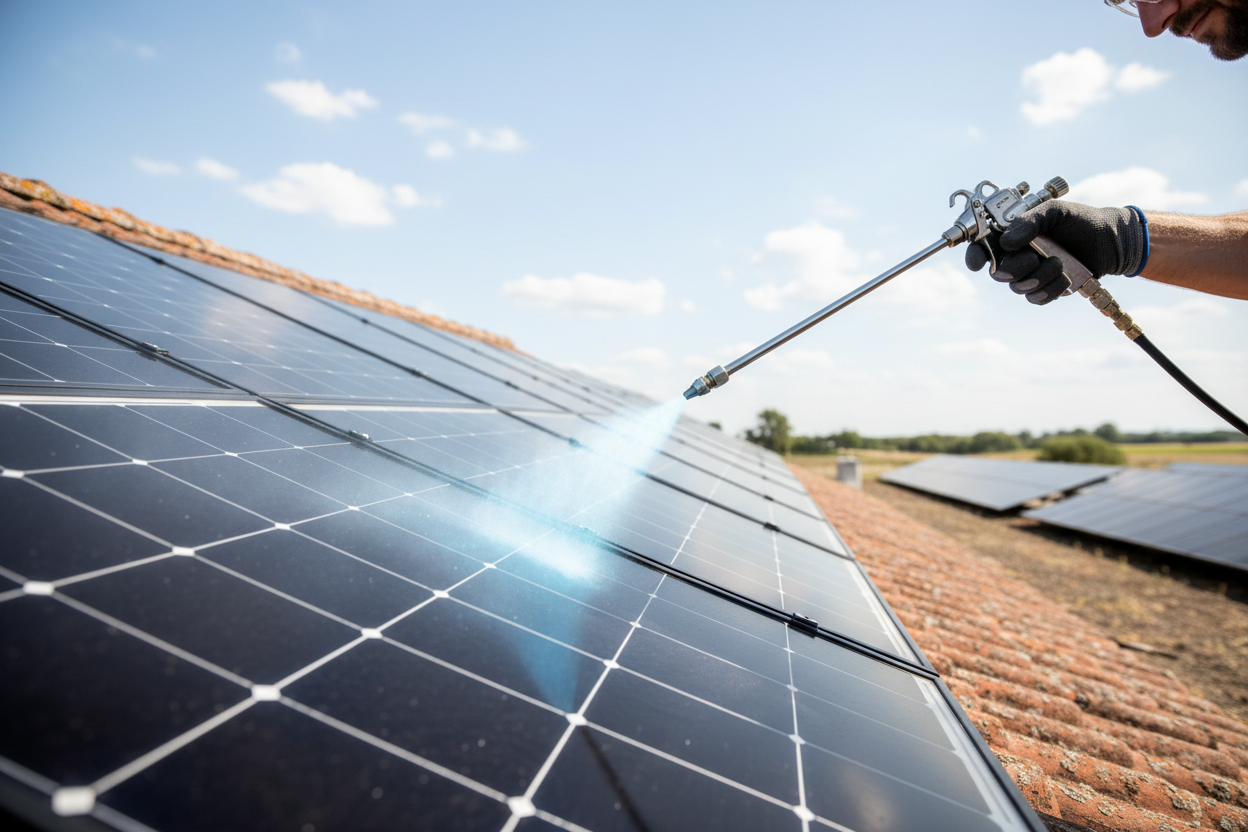
Certain PV coatings also incorporate nano-structured technologies that help break down organic matter when exposed to sunlight. This allows rainwater to remove contaminants more effectively, helping maintain panel cleanliness and efficiency over longer periods.
From a commercial and operational perspective, the choice of coating technology can have a significant impact on maintenance costs, system efficiency, and long-term return on investment.
A coating that requires constant reapplication may initially appear cost-effective, but over time the labour, cleaning frequency, and performance losses can outweigh the upfront savings.
For this reason, while SiO₂ coatings can provide temporary hydrophobic benefits, they are generally better suited to light-duty glass applications rather than permanent solar installations.
For rooftop photovoltaic systems — especially large residential, commercial, or industrial arrays — specialised PV coating technologies offer a more durable, efficient, and economically viable solution.